524.v01.fig • product design • jan 2026
designing for better returns
overview
role
product designer, frontend developer
skill & tools
product design, figma, next.js, react, typescript
What if you could turn 3% returns into 30%, with only one system?
Credit card churning is one of the most lucrative financial hobbies out there. But the learning curve is steep enough that most people never even start.
Credit card churning is a time-intensive process.
Search for the best cards. Compare sign-up bonuses. Check if you're eligible. Open a spreadsheet. Cross-reference bank rules you've never heard of. Realize you forgot a card you opened last year. Start over. You've lost an hour and you still don't know what to do.
The returns are there, but the friction is high enough that most people give up before they ever see them.
524: your playbook.
Sort through every card worth opening.
Decide which cards are best for you.
Automatically calculate eligibility.
Know what action to take next.
design decision
Churners at different experience levels behave in fundamentally different ways.
But the tool should be easy and productive for both.
1. Beginners are overwhelmed
They don't know what cards exist or which rules matter. They need more guidance rather than more options.
2. Experienced churners are impatient
They know the ecosystem. They just want to know exactly when's the right moment.
Each decision I made had to accommodate both workflows.
explore
Every card, filtered your way.
Explore is designed for experienced churners who already know what they're looking for. Persistent side filters let them narrow results without resetting their browsing context.
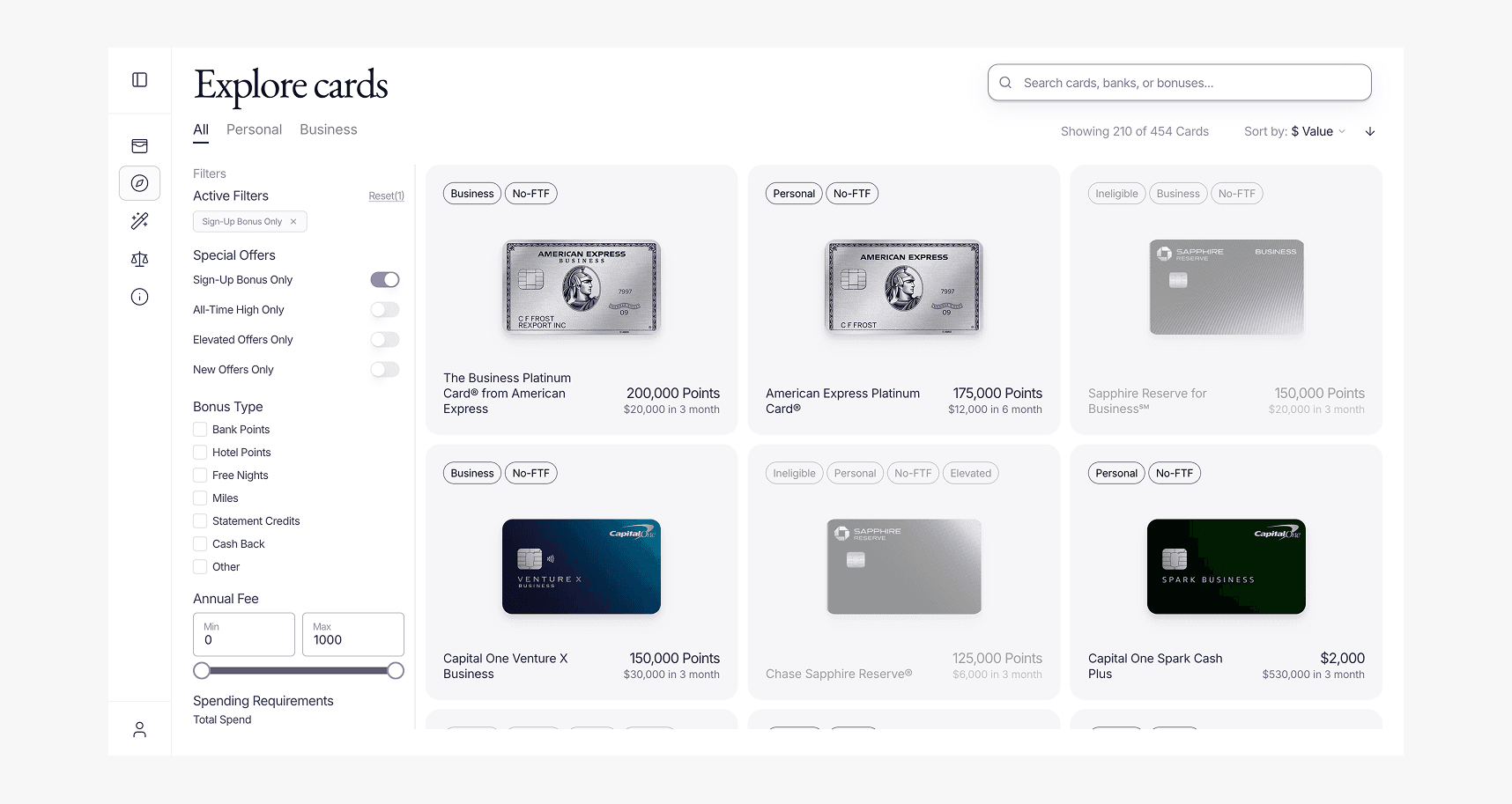
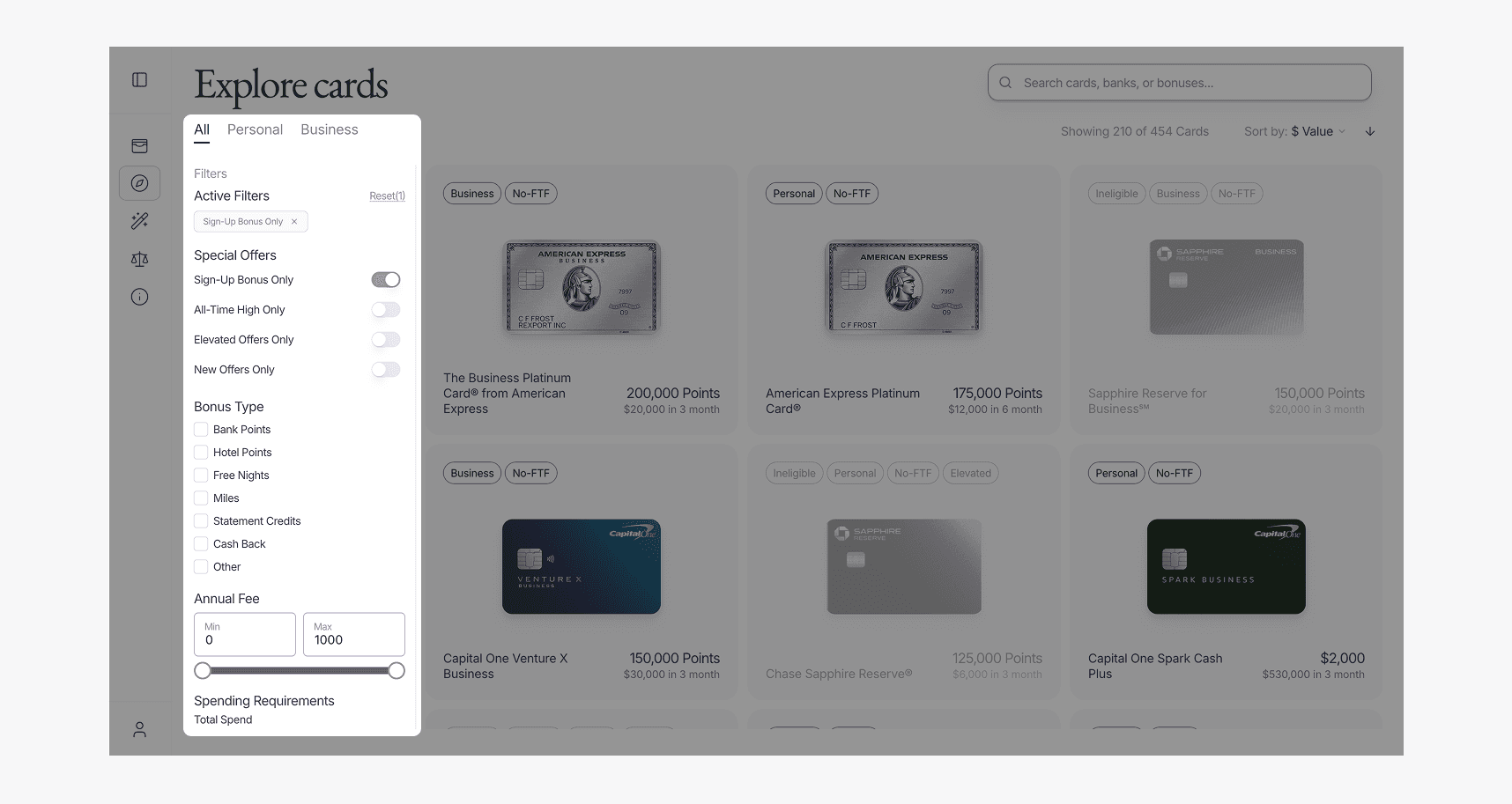
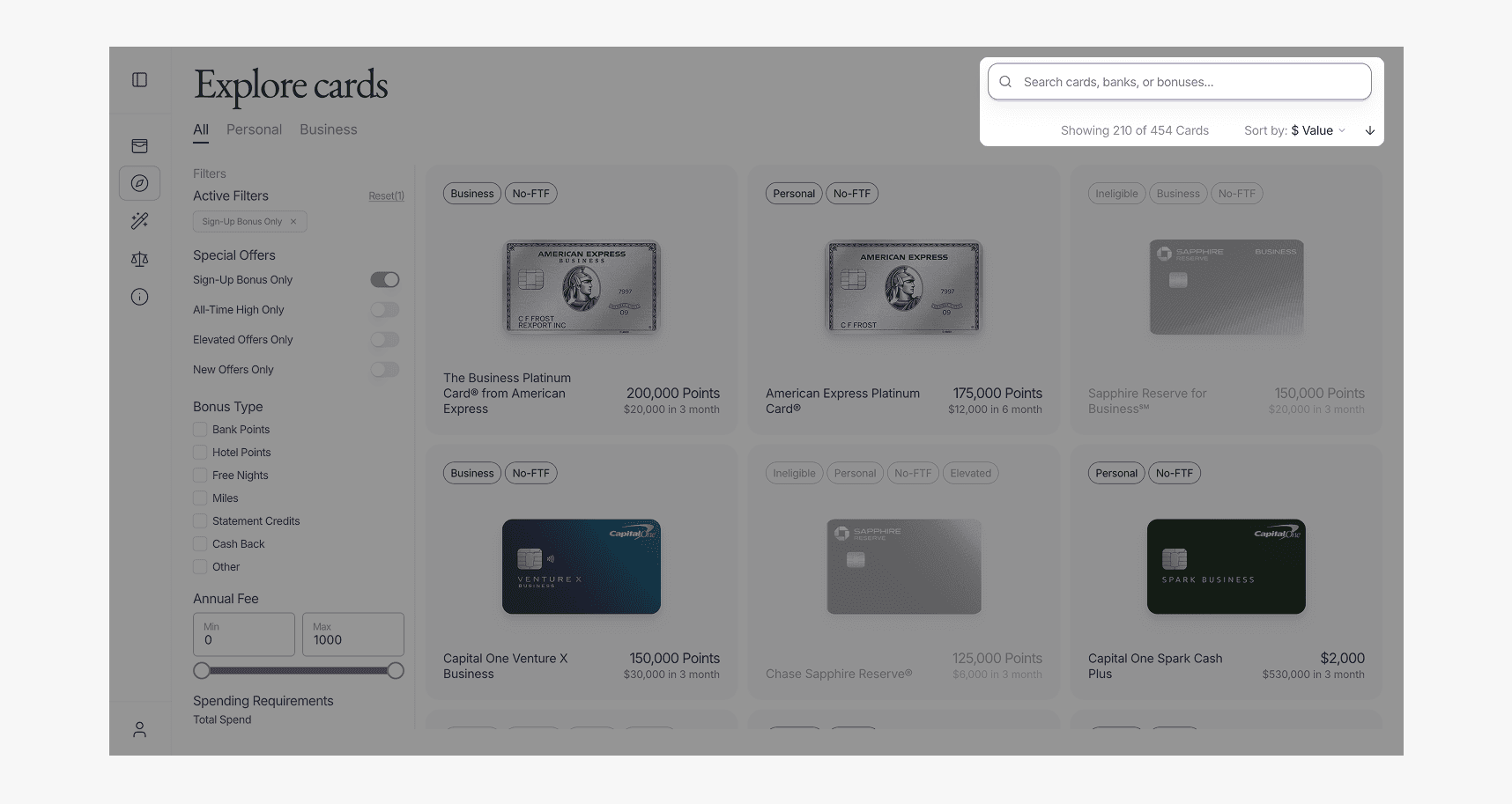
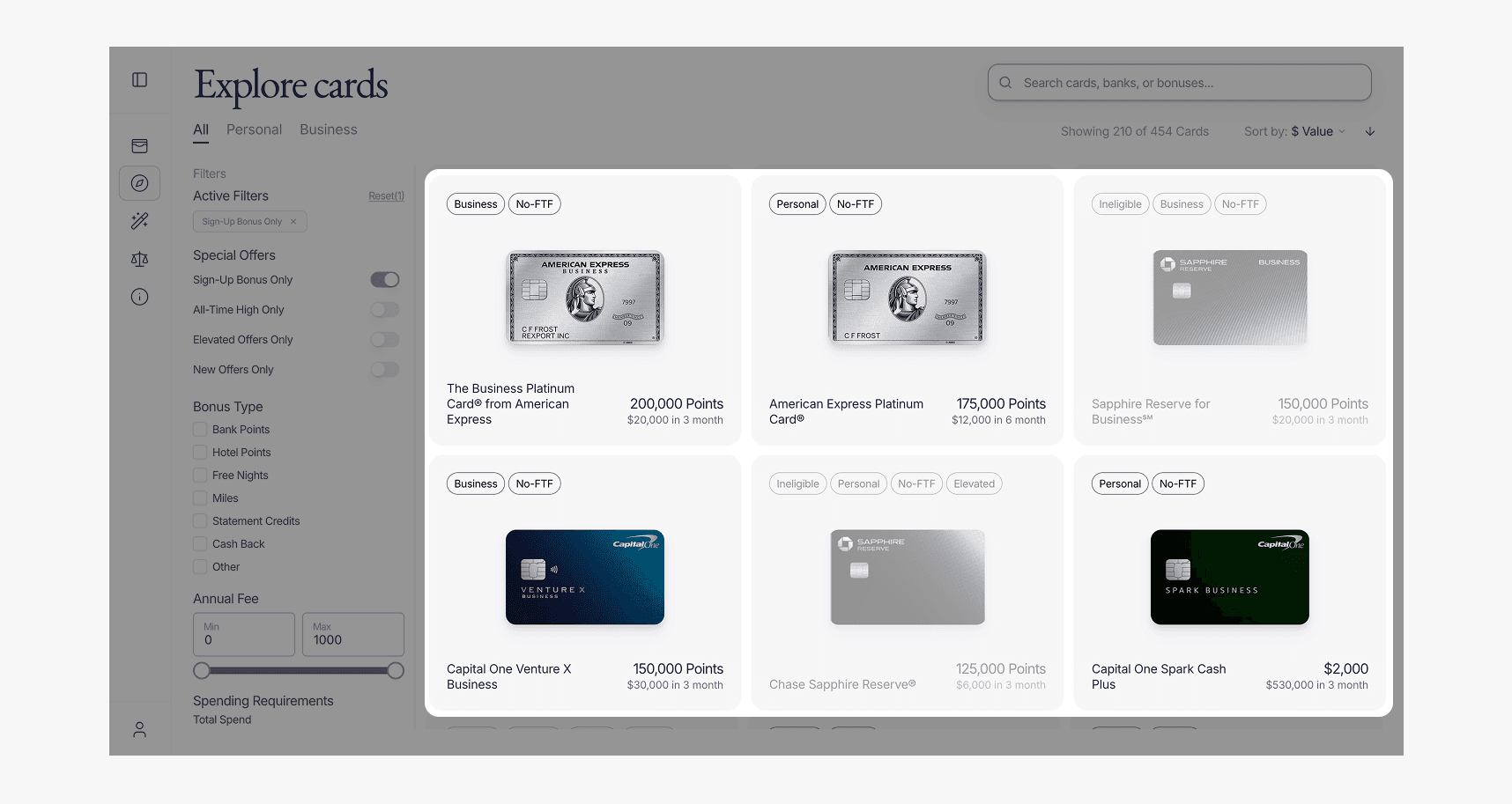
Persistent side filters
Sort & search controls
Card results grid
When considering opening a card, churners also have to think about how it affects future eligibility.
The modal prioritizes clarity while fitting full context without becoming information-dense.
recommender
Making it easy.
Those new to churning always ask: what's the best card to open first?
But beginners don't know what factors matter yet. Faced with hundreds of cards, decision fatigue sets in fast. Recommender guides them to the best options without needing to understand the ecosystem, just yet.
The system asks the right questions and progressively narrows down the best options, shifting cognitive load away from the user.
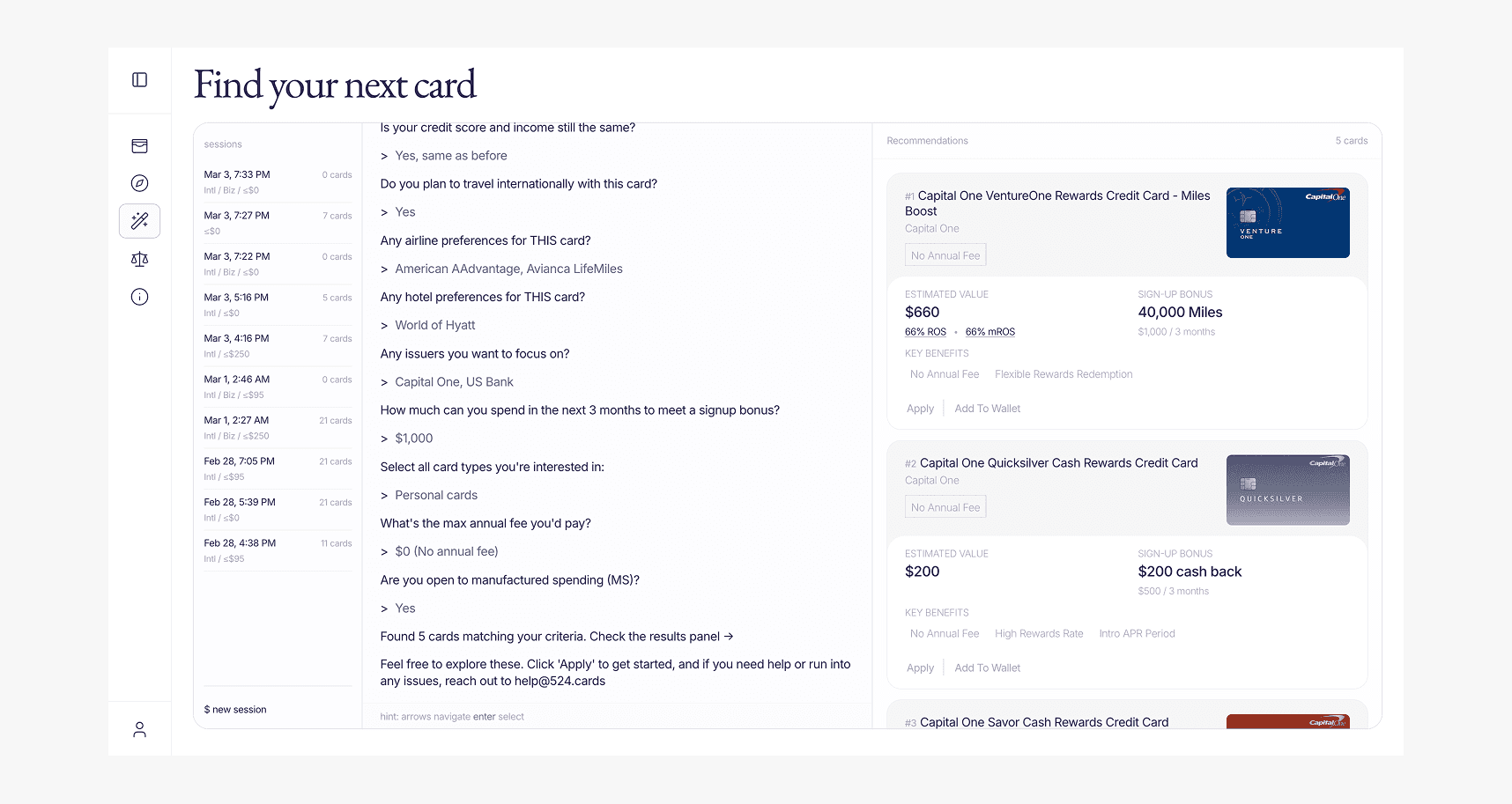
Chat interface with personalized card recommendations
wallet
Next actions.
Wallet was the hardest page to design — it functions as a home page, but beginner and experienced churners need very different things.
New churner
Wants recommendations surfaced and actionable next steps.
Experienced churner
Preoccupied with cards aging out of rules, next bonus, next opening window.
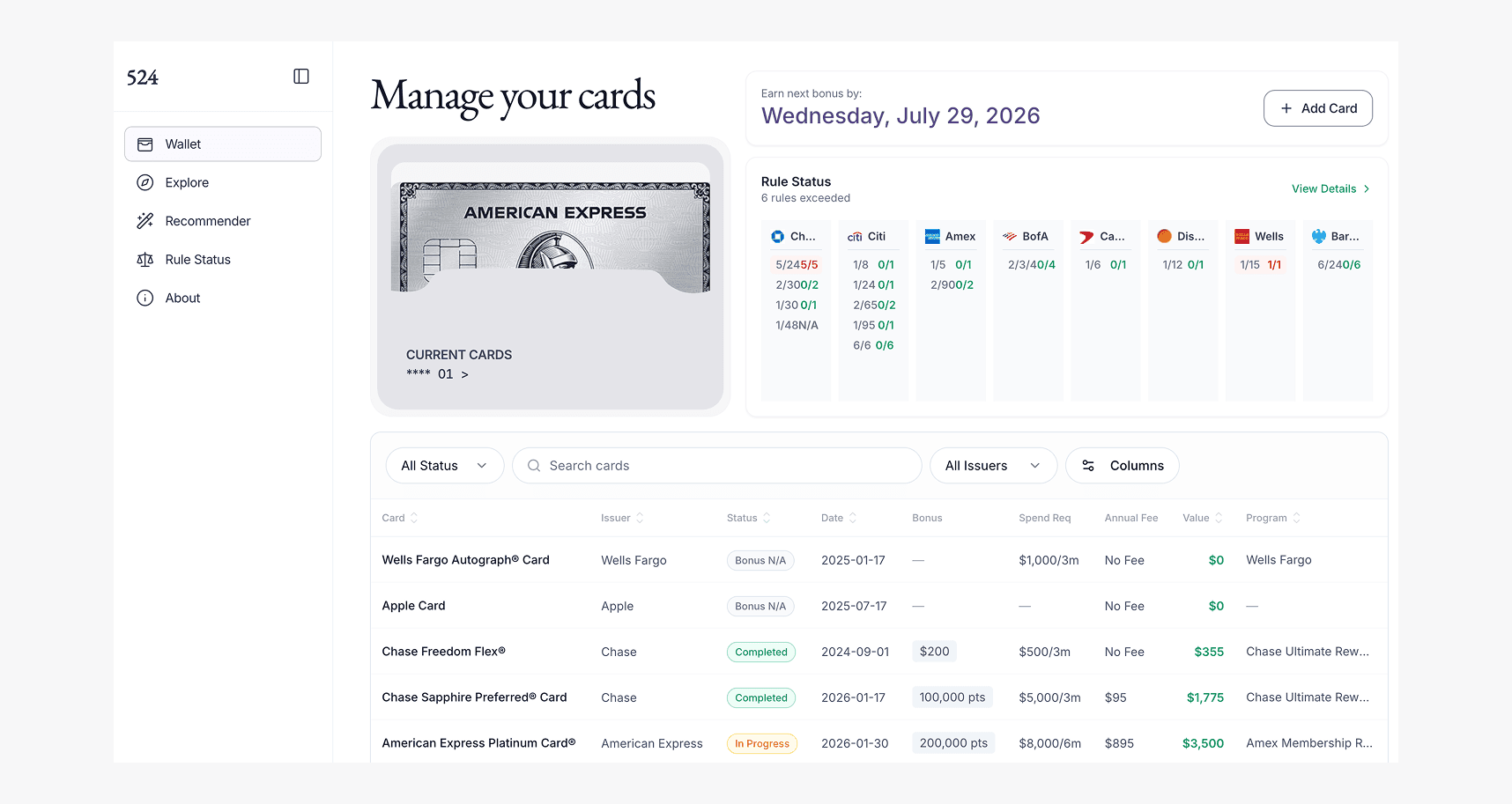
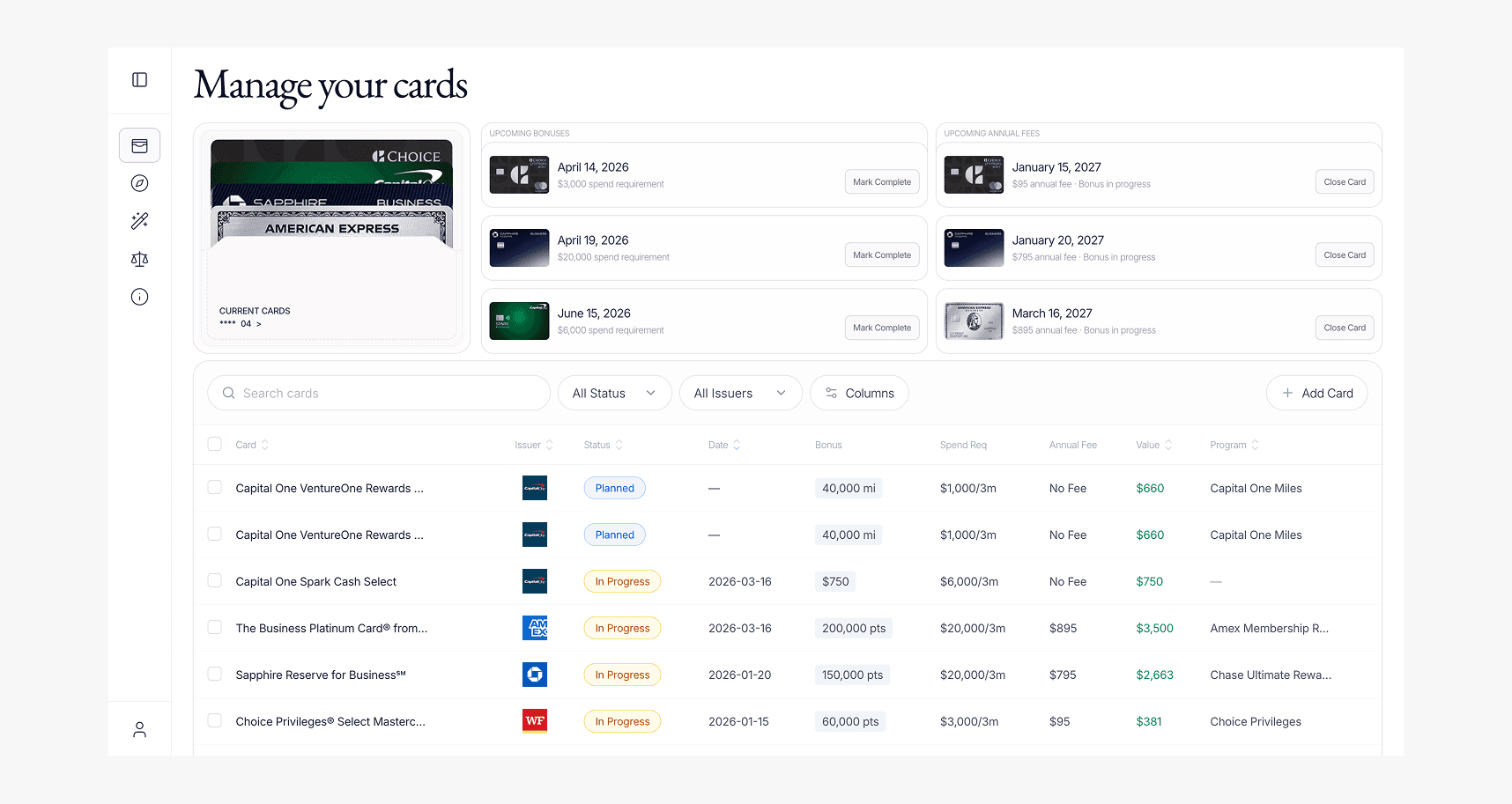
In early iterations we surfaced rule status, next bonus, and card list. But rule status for an obscure bank was rarely top of mind.
We settled on a balanced layout — Wallet surfaces up to three upcoming annual fees and the next bonus posting.
rules
Hide the rulebook.
Credit card churning has an overwhelming amount of rules — 5/24 limits, family restrictions, lifetime bonuses, timing windows.
524 translates every rule into simple eligibility states, removing the mental load entirely.
Expand any rule for contributing cards, blocked offers, and more.
Speed creates feedback.
Feedback creates better design.
There will always be nits. In many ways, being a good designer means constantly seeing areas for improvement, but that shouldn't stop you from shipping something that already solves the core problem and getting the product into users' hands.
When Marcus first suggested the project, I had just burned out from a brutal first semester and knew I had to design something, but had no motivation (read: feared too much) to start. A new project with a deadline of a week gave me something to look forward to — and a reason to design again.
But, the more I designed, the more I hated everything: the font looked off, the spacing was weird, there wasn't enough novelty, there was too much novelty. I started wondering if perhaps I was just a bad designer.
What changed that feeling was finally shipping. Once it was in use by someone other than my own mind, I could see more clearly what worked and what didn't. Shipping gave me the confidence I needed to iterate and improve :')