luma_concept.v01.fig • concept study • feb 2025
build better habits

overview
role
product designer
skill & tools
product design
Accomplishing goals are hard.
People don’t quit goals because they’re lazy. They quit because the goal holds no emotional weight.
Most habit trackers on the market reduce behaviour change to checkboxes. They lack:
- emotional grounding (“why do I want this?”)
- reflection (“how did this habit actually make me feel?”)
- sustainable scope (apps encourage 10 habits at once)
So users churn fast because the app never creates meaning.
Luma reframes digital habit tracking as an emotion-driven journey rather than just another to-do list.
Every goal becomes a lantern. Each habit completion glows your lantern. Once the goal is completed, you can let it float into the sky :)
01 - reflection first
Users can’t create a goal without answering three short reflection prompts.

Through light testing, I found any more than 3 questions created cognitive resistance, while < 3 didn't anchor them enough to the goal.
The key need was to dive deep into why the user wanted to accomplish the goal to create emotional meaning & a reason enough to continue when things got tough.
02 — limit habits per goals
Luma focuses on accomplishing goals through building habits that are easily achievable, digestible and done frequently. But if a singular goal accumulates too many habits, it becomes inevitable for burnout.

03 — completion as a micro feeling check
A major question was:
how do we keep users returning daily without turning habits into punishment?
I loved the idea of BeReal’s “real-time moment capture” because it transforms an action into a moment rather than just a checkmark. But humans are unpredictable, there’s no single universal time where every user can/should complete a habit. Instead of forcing real-time, I focused on including a photo as a persistent memory
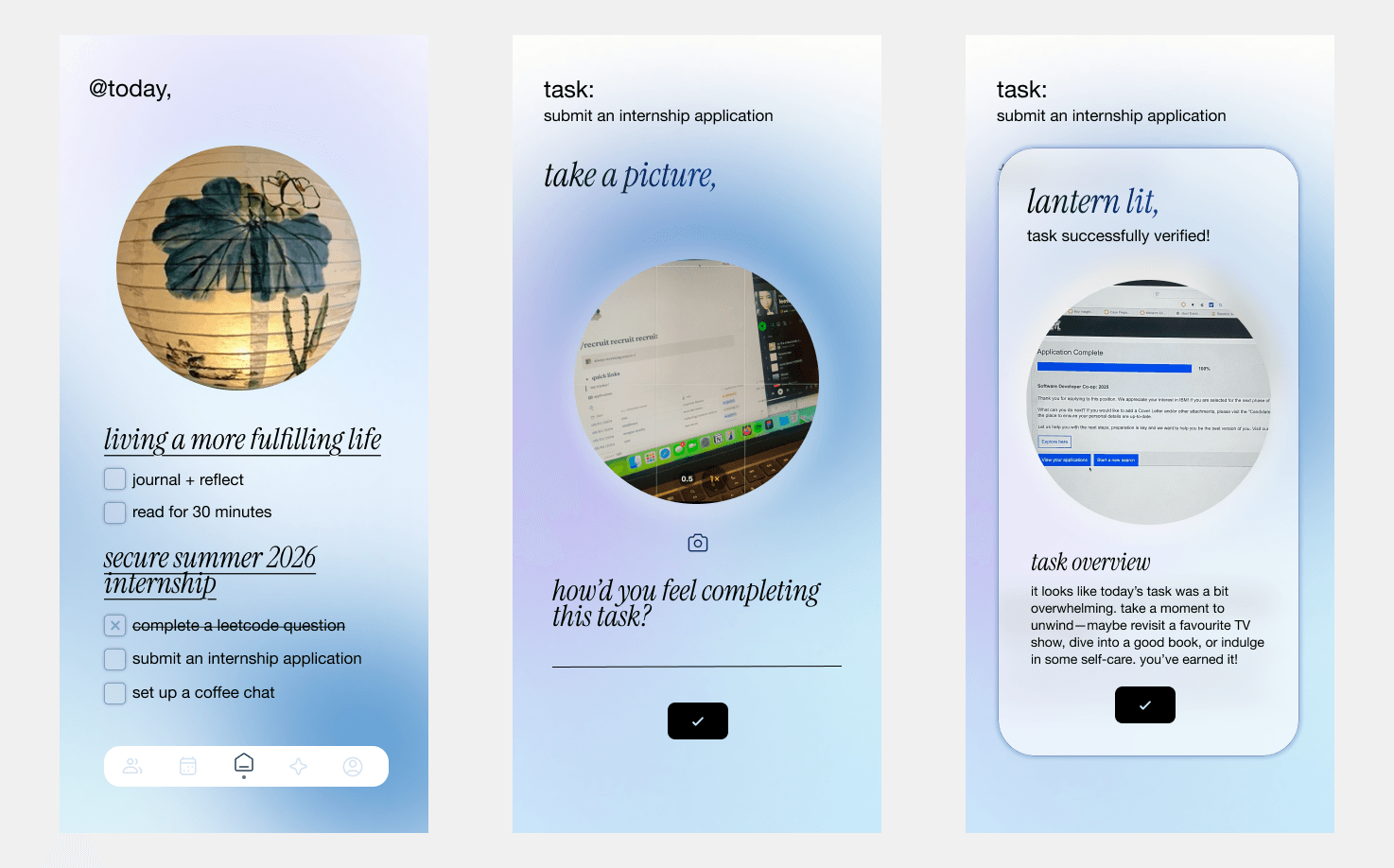
After completing a habit, users answer one last question: how did this feel today?
Habits don’t fall apart because users don’t know what to do; they fall apart because the feelings attached to the habit feel bad. This allows Luma to track emotional response over time, identify recurring negative patterns, and surface that insight back to the user.
goal progression
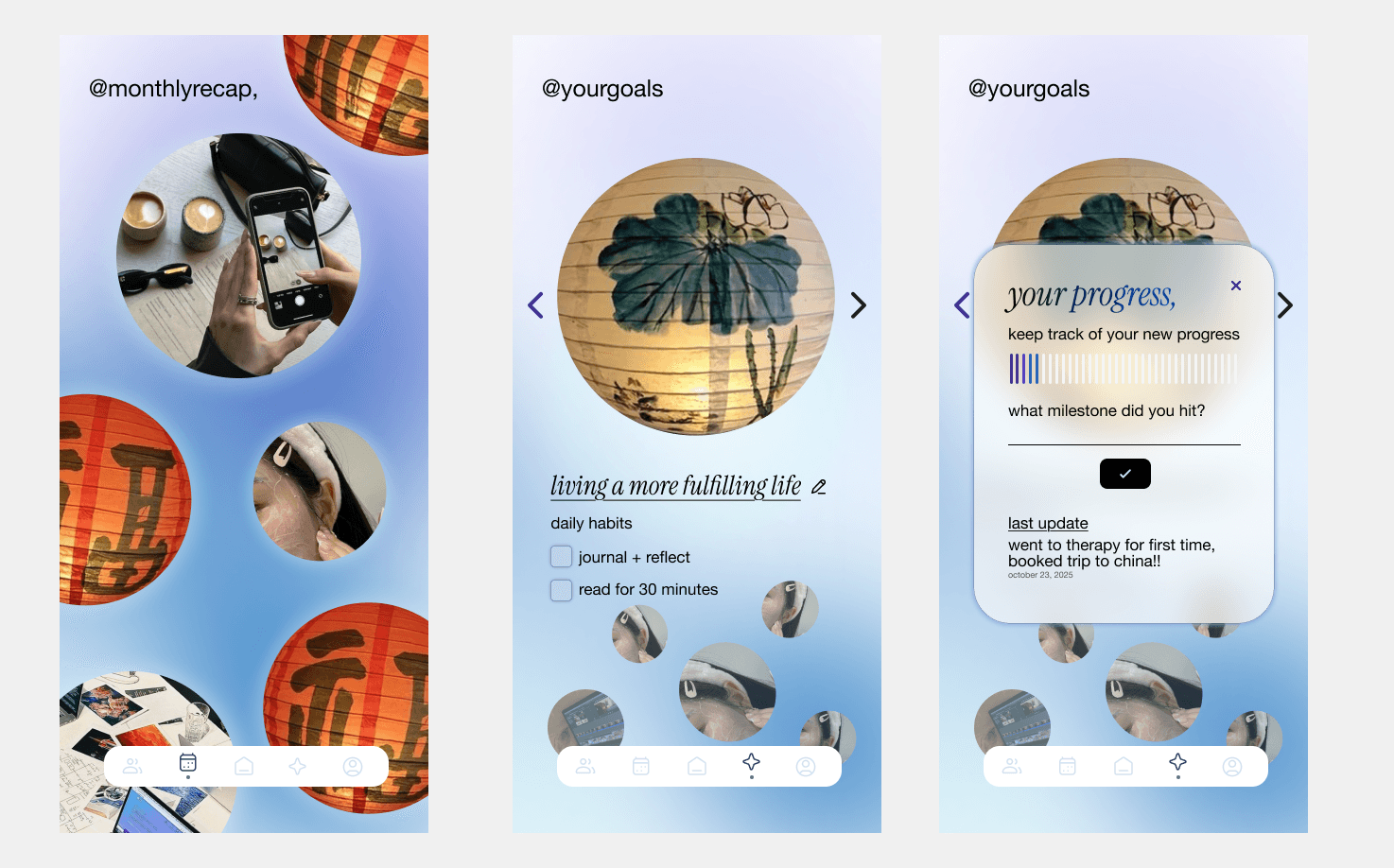
Each completion gradually brightens your lantern and advances progress toward releasing it.
Previous captured images can be remincised on as they float around the lantern. Users can also add personal milestones to mark key moments within the journey & not just the final goal :')
This was my (first) solo concept. I ideated + designed everything myself. I think looking back there is so much more I could’ve done with this project & the research behind every design choice. But also, in hindsight, it was designed just for the sake of coding it LOL.
If I revisited this, I’d explore context-aware reminders (based on behavior patterns instead of time), and gentle loss-aversion mechanics for maybe missed days.
super fun side project (unfortuntely added to my never-ending list of side projects i dont finish #icantcommit)